
The Metal Value vs the Market Value
Why are some gold coins worth more than spot price?
This kind of surplus is not unusual in the world of rare coins. When supply is fixed and demand is driven by those seeking something truly scarce, prices can move far beyond spot value.
The key drivers behind this premium were:
- Extreme rarity: Coins from this period are scarce, and many are never offered for sale.
- Historical significance: A tangible link to Iron Age Britain carries cultural weight.
- Condition and authenticity: Well-preserved examples with clear provenance command stronger prices.
- Competition among buyers: Auctions facilitate price discovery in ways that spot markets do not.
Modern Gold Coins That Have Sold Far Above Spot at Auction
While ancient coins often capture headlines, auction data shows that post-1900 gold coins have also sold at substantial premiums to their intrinsic metal value. Driven by rarity, provenance, and collector demand, these coins can realise far more than the melt value.
One of the most striking examples is the 1933 Saint-Gaudens Double Eagle, a U.S. $20 gold coin that was never officially released into circulation. In June 2021, a single example sold at Sotheby’s for $18.9 million, despite containing less than one troy ounce of gold. At the time of sale, the gold content was worth under $2,000, meaning the market assigned a premium running into thousands of times the metal value, purely due to rarity and legal uniqueness.
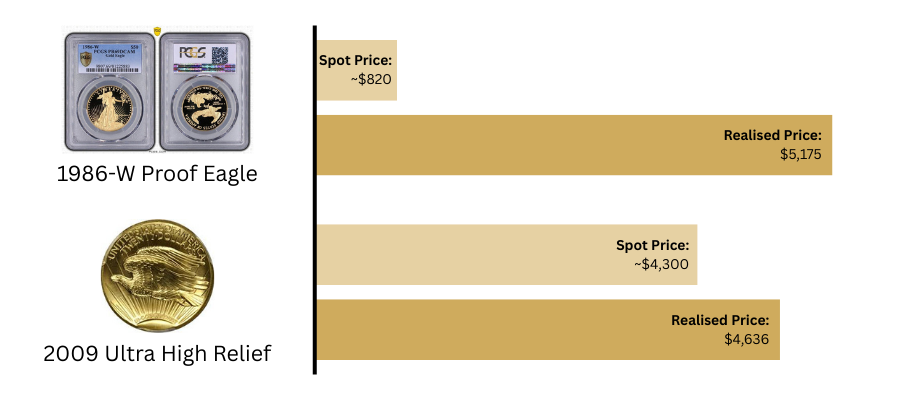
More contemporary examples also demonstrate this effect on a smaller but still meaningful scale. The 1986-W American Gold Eagle Proof, the first proof issue in the series and struck at West Point in limited numbers, sold at Heritage Auctions in 2008 for $5,175. At the time, spot gold was trading near $820 per ounce, meaning the coin achieved a premium of more than 500% above melt value, driven by collector demand for first-year, proof-only issues.
Even modern one-ounce gold coins can attract premiums when rarity and grading come into play. A 2009 Ultra High Relief Double Eagle, containing one ounce of gold, sold at Heritage Auctions in January 2026 for approximately $4,636, at a time when spot gold was close to $4,370. While the premium was modest compared to historic rarities, it still demonstrates how finish, presentation and collector demand can lift prices above spot, even for modern issues.
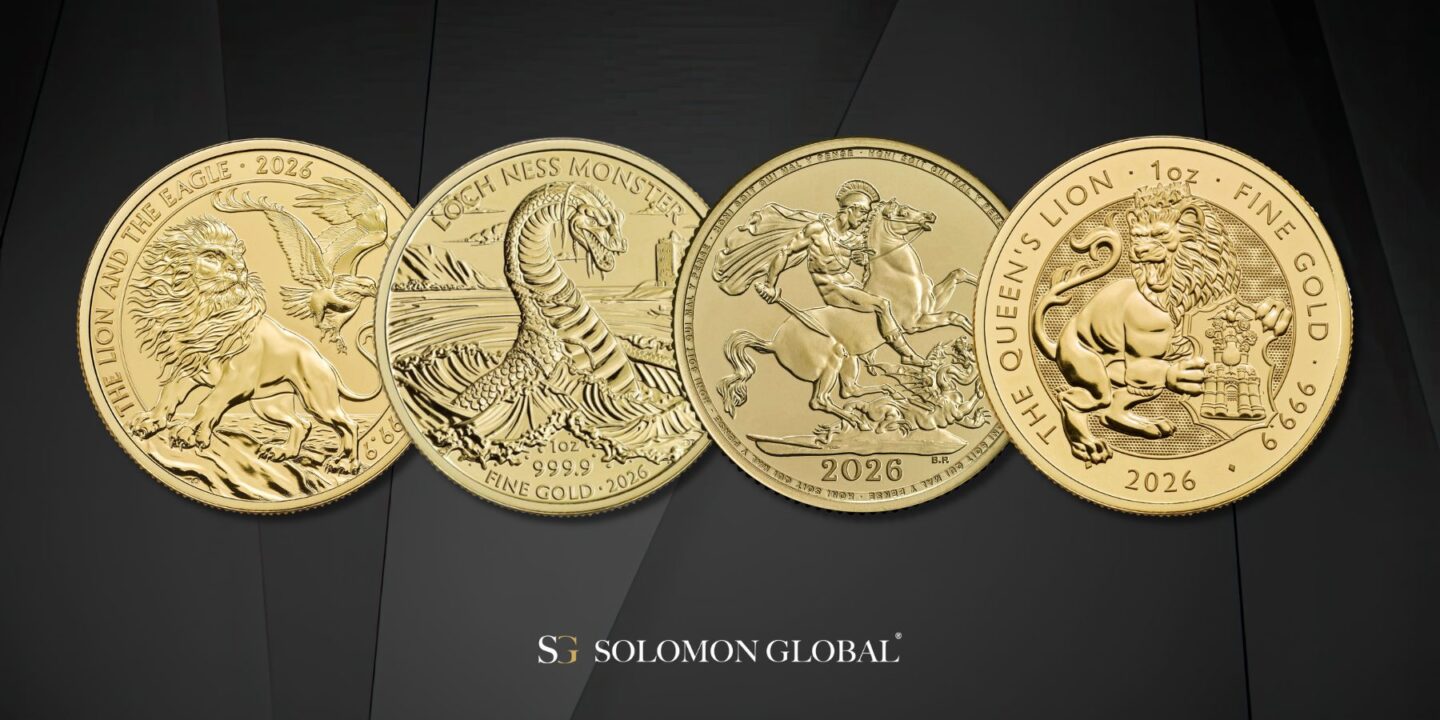
The Same Forces at Work in Modern Gold Coins
- Limited mintages or special releases
- High production quality and finish
- Strong global demand, particularly in times of economic uncertainty
- Recognised mints and trust, such as sovereign-backed coinage